Thursday, 18 April 2013

Questionaire

 
We carried out a questionnaire on a few people within our target audience from our class with the aim of gathering a sufficient amount of qualitative and quantitative data which will provide us with information about what it is about the horror genre that attracts the audience. Our questionnaire did not gather very detailed data about the target audience we asked but what we did gather however, gave us a basic insight that we needed about any general feelings and opinions about horror and is specific sub-genres and appeals.

The survey was created on a site called 'Survey monkey' and asked 25 people to answer it, and these are the results that we gathered

                                                        Are you male or female?
This question is important as it helped us to see whether males and females like different types of horror and their reasons for feeling this way. This graph shows that the majority of people who answered this questionnaire were female.


                                                                    How old are you?
It is imporant to the know the target audience's age. This question is important as we can see what age group is most interested in which type of horror. We can use this question to help create our overall product as we can make sure that the type of horror trailer we want to make will appeal to the right target audience.
 
 
Do you enjoy the horror genre?
This helps us to see what percentage of the people questioned actually like watching horror movies and their reasons for this. The graph shows that the majority of people who filled in this questionnaire are interested by horror movies.
What's a horror film that sticks out to you?
This will help us research certain trailers that are popular to our target audience. We can use these particular named films as part of our inspiration and influences that are evidently popular. E.g Blair Witch Project.


                                              How often do you watch horror films?
This graph shows that the majority of people who answered this questionnaire watch horror films occasionally, while the second highest amount of people watch them often. This shows us that the horror genre odviously has a large target audience and therefore our trailer has to be good to make the audience want to see our finished product.
Where do you usually go to watch a horror film?
This is just interesting for us as film creators.


What do you like most about horror films?
A vast majority claim that psychological horror films are most popular among the horror genre and slasher is the least popular. This tells us that we should make our trailer as psychological as possible to appeal to the largest audience.


etc.


The purpose of this survey was to find out what and which particular genres or age groups would prefer to watch within the horror genre. Aswell as what we as a team could aim while making our trailer to reach the highest target audience. We recieved our results by putting our survey out over facebook and asking people to fill it in, such as friends and family.


Thursday, 21 March 2013

Evaluation


Q1.  In what ways does your media product use, develop or challenge forms and conventions of real media products?

Our group intended to create a horror trailer that not only resembled a realistic Hollywood production but a trailer that would be slightly different to every other existing trailer. 
We as a group, fully understood that the media product we were to create had to reproduce the functionality of those existing horror film trailers that we had previously researched. Inorder to do this, we searched for the most similar film that related closely to our own by this I mean the similarities between the plot, characters/actors and setting. We combined the concept of Blair Witch Project 1999 and our film, Torment (2013). The group all agreed that the Blair Witch Project was a prime example to work around using it's template and low budget success. We then further decided to use information in the trailer as convention - stating the 'facts' - connoting the realism of the film as well as using a documentary format. 
Therefore we decided to embrace the forms and conventions of a real media product. In order to do this, we researched trailers by watching them and analysing them – what affect did they have? And how? how could we pursue the same effect? This way, not only did we learn techniques but we gained a lot of inspiration. We realised that as soon as you watch a horror trailer, you know it’s a horror trailer due to the set of conventions that they so distinctively contain. We also wanted to make this obvious.

 The rest of my answer will include 9 screen shots of my media product compared to frames from real horror trailers, contrasting too and outlines the similarities.


 Here is my first comparison with the sourced film stated below. In production we actually imitated this screen shot, using a similar text. This beginning passage of text may persuade the audience to continue on watching caused by the curiosity this certain information may have caused. We decided to use this particular text of information to add an authentic touch and document the viewer with important ‘information’ of the film itself which will in fact, help the viewer to follow a sense of the story line. Our element of realism is also provoked by this text as it is this fictional scenario that is believed to have genuinely taken place. Which contributes to the creepiness; particularly when backed up by statistics. 


A teaser trailer is a short trailer that will be used to advertise an upcoming film. Often released a few months before the due date, the teaser will help create interest and anticipation and simply give the target audience knowledge of the film; to give them something to look forward too. A teaser trailer is a lot shorter compared to an official, theatrical trailer – usually just under two minutes. It’s main purpose of to literally ‘tease’ it’s audience, hence its name. From this, the audience with be able to grab short snippets from the movie while without being revealed too much of the plot or crucial plot details. It should allow it’s audience to develop an idea of the storyline, genre and of course the actors involved in the film. This will determine whether they want to go see it or not. They create an excitement and hype about the film that will gradually lead them to come up in conversation; supported by the use of posters and film magazines. Teaser trailers are often made while the film is still in production or being edited. As a result of this, the teaser may include scenes and/or alternative versions of scenes that are not actually in the finished film. In many cases, teaser trailers are only made just for big-budget, popular or sequence movies.  

The title of the film is usually presented at the end of the trailer along with any other important information including the release date. Some teaser trailers include a list of the directors and producers involved in the making of the film. This will help the audience to make any connections they might have if they’ve previously experiencing a film with them before. As well as the creators, the teaser may present a lift of the actors included in the film. This list is expected to be shown at the beginning of the trailer therefore the audience will know who to expect and look out for/recognise. This can be important to the marketing of a film as the audience will sometimes decide whether to see the film or not based on who’s starred in it.


This is another comparison from the same trailer. The two screen shots are very similar in MIS EN SCENE in terms of what both shots contain; both actors are ‘discovering something’ or looking for something despite one using a touch to search, the two captions are very closely related. Both are in darkness with a small use of light to show a part of the actor. When you look at either of the screen shots it’s quite scary as the shot itself makes you believe there is something or someone beneath the darkness that surrounds the actor.


Q2.  How effective is the combination of your product and ancillary texts?

A films success can be greatly dependent on it's distributor. A film distributor's role will be to control and manage the films marketing and circulation of movies in theaters. As well as the way the film can be watched elsewhere such as home viewing (DVD, rental, television rights, etc.). Despite whether the film is good or not, the distributor still plays a huge factor on the judgement of this. Film distributers are vital for those films that are small and independent because they are less likely to be known or paid attention of which that don't contain big name stars whereas studio pictures do therefore, it is crucial for viewing attention to be focused on them. The distributors will also decide the budget of the film in terms of advertisement; TV commercials, internet, magazine, posters, trailers, promotions. These methods of advertising can be crucial for the film as it informs the audience to watch it. They have to aim to gain the attention of their target audience and in order to do this they must persuade the audiences that they must see this film and that it will be worthwhile. Age groups all react differently to advertising, a proportion of cinema users are in the age range of 15-24 of whom are likely to react to teaser trailers, internet blogs/websites, film posters, and reviews online or in magazines. Not only will the distributor organise marketing but they will also usually arrange screenings for exhibitors, as well as other marketing techniques that will make the exhibitor believe they will profit financially by showing the film. The distributer will make the decision to which and how many theatres the film will be shown in and how long, which will determine how much money it can be allowed to make during its theatrical run. Distributors ensure their physical delivery to the theater by the opening day, monitor exhibitors to make sure the film is in fact shown in the particular theatre with the minimum number of seats and show times, and ensure the prints' return to the distributor's office or other storage resource also on the contract-based return date. 


Within the group, we decided it was essential to maintain a consistent

curious yet mysterious theme within both the ancillary products and
main product.
After discovering 'Silent Hills' horror poster of which I particularly found effective in terms of creepiness. I was satisfied with it's element of such a spooky simplicity of which I wanted to imitate as my own thus I used this poster as inspiration. We had a photo shoot with our inspiration in our mind, with a clear image of our desired magazine main image and portrayed the a-like pose and position. Very familiar with photoshop due to past AS media creations, I edited my chosen image and enhanced it with unearthly, strange effects to make it look as sinister as possible.
When creating my film poster I considered many features of real film posters by searching through portfolios online. I then analysed these various posters to notice that many were similar in a number of ways. From just briefly looking at these posters I regarded the title, the main image and colour scheme as the most significant features of the poster.


Focusing more on the use of lighting within my magazine product, I thought I'd keep it dark - but not too dark. I 'grained' the image and made the model, myself, stand out from the background behind me. The lighting actually reminds me of a flash from a camera as if, I'm only meant to be seen for a short second. I wanted to keep the portrait simple. I chose to wear clothes that would fit my character in the film; girly, quite classy and just casual clothes in general - nothing

that would indicate that i'm initially a sinister character. This keeps the curiosity throughout the ancillary products. I also wanted to keep to minimum text as I think that the more text and titles added to the cover would reduce the creepy appeal. I used a splash and drip effect of blood in order to involve some real horror conventions and to more importantly, make it obvious that the magazines a horror magazine.

In terms of use of text, I decided to use red, black and white, all three colours that connote horror. As well as the reason that it looked appropriate for each text making it stand out and highlighting the key feature.


For my film poster I used a snapshot of the very ending of Torments trailer. We had initially planned this shot to use it in further ancillary products and so I did. After a little bit of subtle editing the image appeared more poster-like rather than just the plain screenshot and had gained a spook-ier effect. The positioning of the image worked really well with my plan of how I wanted the poster to appear as. For example, 'his head' leaves enough room to the left hand side for the title to be placed. The layout worked really well together without being to squashed together. This means the poster is easy to see and read. The image is the centre image and is the first thing to be noticed when glancing at the poster, continuing on to the title. The image is also quite surreal to an extent, it's at an angle of which is realistically looking down to the viewer as if to be calling for help. Above the title, I included the line 'inspired by a true story' and just below, 'from the director of hostel' - both in a very shadowy, foreseen font. The purpose of adding these two lines is just to inform the audience and to hopefully convince them even more to watch it. In small print along the bottom of the poster, I added the names of actors, production companies and a link to the films very own website.


Q3. What have you learnt from your audience feedback?


Our given feedback was very important to the group. It was vital that we received others opinions from a audience point of view. In terms of how we could improve in order to increase the result of effectiveness of our final product from different aspects. As well as gaining an understanding of which areas within the trailer, in detail, that would need adjusting or enhancing. 

The purpose of creating and developing questionnaires and surveys is to simply create initial ideas for plots and trailers. However the results give the producers a chance to re edit some of their material to appeal to the audience more. The majority of answers can also change the outcome of the overall film i.e changing locations, characters and props. With the feedback we gathered from the viewers that were included in initial research we then linked each and every evaluative feedback with the initial questionnaires. We agreed that a large number of aspects didn’t actually 'live up' to what the audience themselves were expecting at the beginning of the trailer. As a way of forming feedback, we displayed a 'class viewing' of each groups horror trailer over the duration of a lesson. We were given feedback sheets including what we liked, disliked and our opinions  of improvements. This would highlight key advantages and disadvantages to everyones trailers.
From this,  we as a team, agreed that we needed to prioritise these particular requests or 'advice' from our audience as opposed to our own preference. Therefore with a new, somewhat fresh perspective on how to make our horror trailer, Torment, creepier, more thrilling and more importantly, more entertaining than ever - we decided the most productive advice from the feedback would replace the ineffective aspects of the trailer with more horror trailer conventions. For example, we changed the description of text that we had originally used due to negative feedback we received. We also learnt that  it was vital that we needed to add more thrill to the trailer; in order to emphasis this convention we increased the pace of transition which did in fact improve efficiency conveying the frightening horror scenes we wanted to portray. 
Overall without product feedback referring to various flaws in our product, I feel we as a group could have been naive and just very easily left the considerations that resulted in a less effective product. 


In order to construct, create, design and develop all three of my products; my magazine, poster and trailer, I used various technologies and a number of equipment kinds. In terms of media technology, our options were limitless. Computer software to physical use of video cameras and tripods, all were taken to our advantage to benefit our trailer. Without a doubt, we were fortunate that our possibilities were endless in the way that media technology benefited us. 

As followed are the platforms that occurred during the production of Torment horror trailer. 


Because the use of jotty notes, spider diagrams and basic notes we actually required technology the least at this beginning stage. We were able to plan using story boards and brainstorms to record our important notes that soon because ideas. We built on these notes and developed them further each session of discussion. 

As a survey, we used a website called 'Survey Monkey' of which we composed our questionnaire that we would later receive our feedback via. However the survey also led us in which direction we should include in the film during planning.


Most vital, to film our trailer, we used a HD video recorder belonging to the college that was provided to us. Both still and moving images were able to be captured on the device. Within the team, we had one main recorder, Oscar. However we did all take a turn to gain some experience and practical knowledge from it which worked out well. After travelling to one of the group members relatives buildings,  our film location, we recored hours of footage that we would later carefully choose from. We purposely filmed the trailer hand-held as this is what our films' theme revolved around; conventional for low budget films such as The Blair Witch Project. Therefore the use of a tripod was not required. 


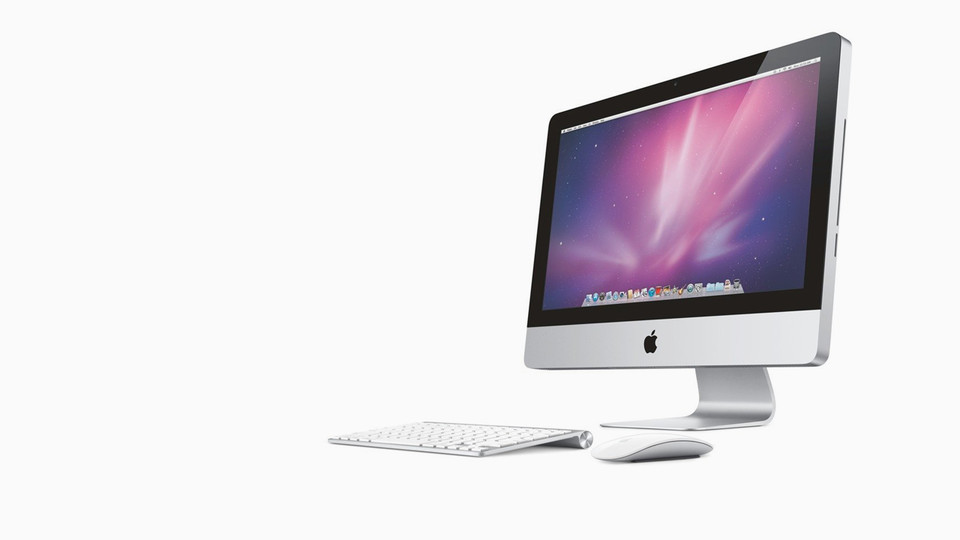
After providing ourselves with hours of material, the team would concentrate on accompanying ourselves with Macintosh Software, Final Cut pro. Each group was assigned their own iMac which would contain every useful programme to produce our horror trailer. With each of our own iMacs, we would be able to save our work directly onto this certain desktop which would save time each lesson rather than waiting around for the server to load. 
Final Cut pro was the most significant amongst all of the tools used throughout the project. It provided us with the functionality needed to result in a professional outcome and without this piece of media technology, our trailer would not exist.  It was a programme new to all of us, with only very basic skills learnt during the A2 preparation in late 2012. Despite our lack of practice however, our skills developed gradually over time during the construction of the trailer. 

Photoshop, Premiere Pro and GarageBand were the three main professional programmes we used that required minimal training. More advanced, more complicated features were available to use that if used correctly and well would have a substantial effect but as a team we kept the usual, more basic tools that the programme had to offer; we didn't want to risk loosing the quality or quantity of footage due to in-proper use of tools.


Garageband was used to create original and unique sound effects and our very own soundtrack as a piece of music; with one member of the group feeling confident due to existing skill and knowledge of the programme. We were open-minded to the soundtrack we'd like to use, however we had a certain standard of creepiness and suspense we wanted to pursue. As well as keeping in mind how the piece would fit to the clips of the trailer while of course keeping in nice harmony and complimenting the footage. Using Apples Garageband would mean that our music would be 100% original.


iMac Programmes were not the only media products involved in the creation of the trailer. We have to appreciate the important use of the internet -  partiually in the research stage of production.  IMDB (Internet Movie Database) contains the basic or in-depth and simply interesting details for millions of movies, from cinema blockbusters to niche, low budget releases. 

Once we had completed the editing process, using Premiere Pro, we would uploaded our completed trailer onto Youtube. Now available to the general public, like any other professional horror trailer. This meant it was very realistic. In fact, YouTube allows the user to upload their videos free of charge, for restricted or free viewing by the public. Each video is uploaded in the same way. Film makers are able to share their video, which can be shared again like a circle which in time dramatically increasing views/reach. 

The final action for us to take would be to use Blogger.com to upload all our final work to. I believe that myself and my team used the correct and appropriate media technology in particular contexts, maintaining a high standard. 

Tuesday, 19 March 2013

AR-M620U_20130305_135808

AR-M620U_20130305_135915

Budgeting

AR-M620U_20130305_135941

Talent Releases

AR-M620U_20130305_140010

Initial Planning

AR-M620U_20130305_140039

Recces

AR-M620U_20130305_140102

Production Schedule

AR-M620U_20130305_140125

Risk Assessment Form

AR-M620U_20130305_140226.pdf

Storyboards

AR-M620U_20130305_140259

Wednesday, 13 February 2013

'Torment' mood board


This is a quick handmade mood board that inspires our film 'Torment'. It includes typical horror elements aswell as images a little differant. The board contains images similar to shots in our trailer; darkness, isolation, blood and mystery; creating a very paranormal feeling.

Monday, 19 November 2012

Group Ideas


Idea 1: A man who starts to see abnormal things to point at which he starts to question and confront it. Eventually it drives him to insanity and is sectioned, whilst his family find out that these ‘visions’ were actually real. But it is too late and the man is found dead is the psychiatric centre. 

Idea 2: A man who suffers from split personality disorder finds himself seeing things that are extremely unusual and random. For example people wearing masks and dead people. He eventual kills on of these people, as a result of this he ends up taking his own life.

Idea 3: Two main central characters. Story based around one with the other being his hyper best friend. Their school teacher is a mass murderer where he overhears them talking about what they’re doing at the weekend. They are with a group of friends where they go to a forest drinking where 1 friend gets killed by the murderer. The group spot him where he chases them and they get away. There is havoc.

Idea 4: I would prefer to have a simple, traditional idea; inspired by classic trailers such as Halloween, The Shining etc. dated back from the 1980’s. This trailer would include the use of “creepy” ‘mask’ and stereotypical weapons such a knife, axe etc. My ideal location would be at night time, ‘lost’ in the woods. I’d like to create the killer as an uncontrollable psycho that doesn’t reveal his identity or voice at any time.

Film Distribution and Marketing


The term film distribution is the process of how a film is made avaliable for an audience to watch in a cinema.Film distribution is a vital part of making a film available to the public; without an audience the film can't make any money. 
Responsible, the film distributer will identify the films audience, decide the release date of the film and organise the method through which it will be exhibited - wether it's home-viewing(DVD, video-on-demand, download, television programs through broadcast syndication etc.) or theatrically. But not only are they responsible for just distributing it in different countries, they are also responsible for the whole marketing side of the movie, so this would include all of the trailers, teaser trailers, posters, billboards and merchandise of the movie.
The film distributor may be a company or an individual who owns distribution networks and can therfore release the film through vertical integration. For example, of the low budget 'Colin' was released in one cinema in England with an estimated budget of $70.
A great example of how women are represented in horror is Halloween (1978). This consisted of a masked killer who escapes from a psychiatric centre to cause havoc in Haddonfield during Halloween. Slowly killing off the teenagers due to sinful acts, for example Bob and Linda whilst having sex. For instance, Carol Clover (publisher of ‘Men, Women and Chainsaws: gender in the Modern Horror Film’) would say Myers kills in response to his sister having sex. Therefore, he uses a phallic weapon (knife) to deal with his repressed sexuality. Clover would also mention the final girl theory, saying that Laurie fought back, and stabs her attacker with a knitting needle and again with a coat hanger. Clover’s final girl theory suggests the girl that’s a virgin with a masculine presence would be the woman to escape or fight the attacker back.
Distributors also work with a marketing plan, which is basically to try and get as many people as possible wanting to see thew movie, so that when it comes out, it will make more money. They do this in several ways, such as releasing a teaser trailer up to a year before the film is even finished, just to get people talking. By doing this, people then become aware of the film, and spread this awareness through word of mouth. When it comes nearer the time of the release, the distributors create posters, trailers and any other forms of advertisement for the movie, such as pairing up with other companies to advertise it. 

Thursday, 18 October 2012

Representation of Woman within the Horror Genre

Almost always, the male character is portrayed as the killer/the dominant/powerful figure. This as been typical for the past few decades. Most horror films have always placed women as the weaker sex, they are the victims who are usually brutally murdered and the first few to die by the murderer / deranged stalker, etc., who is a male. 
During this time, the film industry itself has portrayed these woman in a number of ways with a frail, weak and fragile persona. However the iconography of women in horror films in modern day films as changed rather dramatically in the sense that these women are now able to defend themselves and 'fight back'; protecting themselves with weapons and literally psychically fighting the villain. This would never have occurred in a film such as 'Nosferatu'. An example of this change is 'Resident Evil' - Alice fights her way through the swarms of zombies protecting herself with a gun. As well as standing in a threatening manner, looking 'sexy',  on the horror films poster. This creates huge awareness of her authority and dominance to the audience.

Carol J. Clover, a popular and prominent feminist film theorist and critic actually wrote a book entitled “Men, Women, and Chainsaws: Gender in the Modern Horror Film” in 1992. Clover coined the term “final girl” in her book. She explained that a “final girl” character is the last surviving female in the horror film who manages to kill the murderer on her own or at least manages to escape successfully and hence, lives to tell the story. Since the start of 1974 and thereafter, there have been many horror films that contain “final girl” characters and Clover (1992) added that since 1974, the survivors in horror films were mostly females.


However on the other hand, a lot of films - old and recent - have the attractive female running (tripping and falling all over the place) around, failing to escape her killer. For example in the original Scream; the killer pysco plays mind games with Casey, fooling her only to frighten her more. This leaves the audience waiting for suspense or in other words, something terribly awful to happen.

Some films show the deathly scene involving the act of sexual activity; such as Halloween, seconds before Michaels sisters death. As well as the scene of which the couple have just finished making love, Michael eliminates the man, leaving the women defenceless and alone with Michael.
Usually in horror films with similar context, the woman is court up in a 'cat and mouse situation' with the villain. Of course, the chase will eventually end with the killer achieving his ruthless murder. However during this climax, the situation will switch where the victim takes her chance to injure the killer thinking she has won the deathly battle, only to be fooled and finally defeated to her death. In other situations her escape may be blocked or trapped leaving simply no hope for herself.

Wednesday, 17 October 2012

Narrative and The Crazies

Propp

The Villian – U.S Army -  They are the cause of the virus. They crashed a military aircraft containing a dangerous chemical in to the town’s water.
 
The Hero – David – David rescures his wife and whatever he can of the community. He uses his knowledge and effort to the best of his ability. David and his wife is the last to survive in the film. 
 
The Donor – Deputy Russell Clank can be qualified as both The Donor and the Helper. He is seen as the ‘Donor’ because each time David’s life is at risk, Deputy Clank saves David’s life. If it wasn’t for Clank, David would have not survived throughout the film.


The Princess – Judy qualifies as the princess because she is married to David. David is trying to save her and their new life and unborn baby. She is also classed as the princess because the army capture her and keep her in hospital as they believe she is infected. 
The Farther – Judy also takes the form of a farther role as she tries her hardest to protect Becca from being killed.


The Dispatcher – Rory – Rory is the first person in the town to become infected by the deadly virus. As he is shot aswell, this starts a shock and panic in the town.
The False Hero – The Mayor is seen as the false hero as he is on the who refuses to turn off the contaminated water for the town. His action allowed the rest of the town to become infected and his decision became the unfatel event for the entire town resulting in thousands of deaths.

Monday, 15 October 2012

Narrative and Halloween

As a class we watched and studied horrors most iconic film, 'Halloween' Afterwards we discussed the different theorists, relating each theory to the film 'Halloween'
These famous theorists included Vladimir Propp, Tzvetan Todorov, Levi Strauss & Bordwell and Thompson.

 Propp


PROPP is that every story has a similar set of characters, that fit into a certain group of character functions.


1. The Villain - Michael; as the pyhcopatchic murderer. We see him at the very beginning of the film, at a young age, murdering his innocent sister. 

2. The Hero - Laurie, Sheriff Leigh Brackett & Dr. Sam Loomis; In my opinion the strongest hero is Dr. Sam Loomis. Dr. Loomis is determined to chance upon Michael and it is Dr. Sam Loomis who shoots Michael at the very end.
3. The Donor -  Dr. Sam Loomis
4. The Helper -  Sheriff Leigh Brackett
5. The Princess - Laurie; Laura is suggested to be the princess. Laurie is Michael's main victim in the film and is stalked and followed throughout the film. Towards the end of the film Laurie also act as a hero - defending herself and young children she is at the time, taking care of. However it is Dr. Sam Loomis who Laurie relies on after she struggles to fight Michael.
6. The Dispatcher - Annie Brackett, Sheriff
7. The False Hero - Annie Brackett

Tzvetan Todorov

'Halloween' follows the narrative structure of Todorov's 'Equilibrium' theory. 

At the beginning of 'Halloween' Michael Myers is shown murdering his innocent, young sister; immeditaly causing disequilibruium. However his is used only to justify the story to the audience in order that the rest of the plot unravels later. Soon after we are told that the time of the film has now changed to '15 years later'. From here the audience can settle down into the film, and that something has happened between this time scale. We are then shown the normal live of the young, smart and innocent girl babysitter, Laure. Laurie is shown with her rebellious friends that smoke majirana and sleep with boys. This is apart of the Equilibrium. 
As the plot proceeds, Michael is introduced to Laurie as a series of events become more and more tense and complicated as he develops his intentions of murdering the young girl. This is now Disequilibrium. At the very end of the film, after being shot various times by Laurie, Michael is finally shot by Dr. Loomis to then Michael than takes his chance to escape. 
In General;

Equilibrium - The home of Michael Myer. The stereotypical suburbia setting. And the normality of halloween night - trick or treaters dressed up to fright. 


Disruption - The murder of Michaels sister. This quick beginning disruption of the equilibrium enables 'Halloween' to appear more scary in this short time as the audience watching, are expecting this establishment of normality. But because of the disruption young Michael has just caused, the audience are now horrified and out of their comfort zone of what they can relate too. 

Disequilibrium - Laurie, inorder to survive, has to defend and protect herself and others from Michael. 

New Equilibrium - Dr. Loomis ending up saving Laurie by shooting Michael. Nevertheless, Michael is still not dead. As a result, Michael is still alive and maybe even more crazy and dangerous meanwhile, Laurie's friends are all dead. 

Overall, these stages are difficult to comprehend due to the time gap from 1963 to 1678 and the need to have a new equilibrium settled. 'Halloweens' ending is far from a classic new equilibrium of which the resolution is supposed to be better than the beginning.


Claude Levi-Strauss


Rather than looking at the order of events of which happen, Strauss concentrates of the sets of opposite values. Binary oppositions can reveal a structure of a particular media text - for example, GOOD and EVIL. Or even a series of binary oppositions which may be created by the narrative. 
In horrors, such as 'Halloween', binary oppositions can be obvious. This perhaps explains why sometimes 'The False Hero' doesn't necessary fit into 'Halloween' because the no character is good nor bad. 
In 'Halloween'

Good - Laurie / Evil - Michael Myers


Past - 1963 / Present - 1978


Rural - Smiths Grove / Urban - Haddonfield


Innocent - Laurie / Guilt - Michael Myers 


Sane - Dr. Loomis / Insane - Michael Myers


Man - Laurie / Monster - Michael Myers

Innocent Youth - Tommy / Non Innocent Youth - Michael Myers


Bordwell and Thompson

This is a 'chain of events in a cause-effect relationship occurring in time and space'


At the start of the film, Michael is shown spying (of which he have the view from his aspect) on his sister and partner as they express their love for one another and continue on upstairs. We do not know if this angers Michael - causing him to pick up the knife - or wether Michael had planned on killing his sister and was waiting for the right time; we do not know.  These series of changes occur because of Michaels sister and lover causing Michaels desision to murder - effecting the outcome of her death.  

After we are shown Myers murdering his sister, Myers is put into mental insistution. He is in their for the following 15 years of which we, the viewer, are not shown; or told.  We only presume this because we are shown a man escape after the car scene. 

Trailer analyses: The Shining, Hostel & Hide and Seek


Analysis  - The Shining     

This is the trailer of the 1980's, 'The Shining'

'The Shining is based on Stephen King's novel of the same name. Former teacher and recovering alcoholic Jack Torrance (Nicholson) interviews for a caretaker job at the Overlook Hotel in an effort to rebuild his life after his volatile temper lost him a teaching position. The hotel manager, Mr. Ullman, warns Jack that he and his family will be snowbound through most of the winter and of the potential for cabin fever. He further reinforces his point by recounting a season when the caretaker, Charles Grady, went crazy and brutally killed his wife, his two girls (ages eight and ten), and finally himself. Given his own desperation and the opportunity to pursue his true passion, writing, Jack acknowledges the warning, but accepts the job.'
    -  http://www.traileraddict.com/trailer/the-shining/trailer#e994VscOP5BvZvLh.99 '


 This trailer, like most horror trailers of this era, begins from the beginning of the movie and essculates in order of the film; almost like a mini, short movie. It begins with a voice over explaining the history of the hotel while visually showing the hotel itself.  During this introduction there is also a dramatic musical piece played, creating suspension. While telling the history, Jack is shown leading to the exact same unfortunate fate. However it then flashes back to Jack ironically quoting "You can rest assure Mr.Roman, that's not going to happen with me"; while devilshly smirking. Furthermore, a birds eye view is shown over the hotel and onto a scene of the family in their car, driving to the their part-time home hotel. Theatrical music is played again continuing on throughout the remaining trailer. A series of events reveal Jacks condition worsening - increasing the tension and terror as scenes become uncomfortable and frightening. The last thirty seconds of the trailer consist of clips merged together in a very fast pace of Jack attempting to kill his wife and son; Ending with the bloody red, creepy title 'The Shining'.


Analysis - The Hostel

This trailer of the more recent film 'Hostel' is much different to 'The Shining' trailer. This trailer is far more mysterious and unexplained whereas 'The Shining' trailer, we basically see a short version of the film. 
'Hostel' is a conventional film where we see the features we expect; death, blood, climax/dramatic scenes and good and bad characters. The trailer begins with a creepy setting under dim light, with close up shots - setting a grim, dismal and scary scene. Orange text is then used to stand out from the dark, black background with captions that relate to the setting - enabling the audience with a sense of plot. This text is used to grab the viewers attention, making them want to carry on reading. Already, they are curious. 
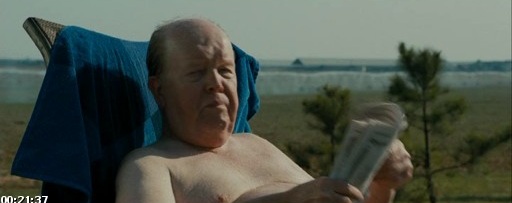
Immediately after the first caption, there is a long shot of a man that appears to be wearing a uniform and mask, holding a hose. This already indicates that something sinister and creepy is about to evolve involving the characters. After the second caption 'where all your darkest' there is a topless man sitting with a cloth taken off his head revealing his head which is faced vaguely away from the camera; suggesting he may be avoiding or hiding something. The third caption 'sickest fantasies' reveals gives away a lot about the plot - indicating it will be a 'sick' grusume horror film involving human suffering. Shots of tools and following captions continue unveiling the events to take place. These tools are to be used against the victims - like all other horror films, this trailer links into this convention. The following scenes show a number of different victims, some attempting to escape and some that look as though they are apart/responsible of the sick and twisted events. Meaning that this could mean that the PROPP theory is included within the plot as like many other films. 


Anaylis - Hide and Seak

I genuinely think this trailer is very creepy and having not seen the film, I'm defiantly interesting in watching it soon! Therefore, I can say I believe this trailer successfully archives its intentions of attracting a potential audience. I can see that the film has used well known, recognisable actors; suggesting that the film is of high budget and good quality.
The Trailer makes use of some classic horror conventions such as using a young child to create 'imaginary friends'; making their childhood innocence somewhat sinister. Like how many other movies
have developed, the trailer archives a creepy innocence.
The setting of the trailer is shown to be based in the characters family home. However in the trailer we learn this is fact the family's new home. This is incredibly common for a plot similar to 'Hide and Seek'.
The trailer uses restricted narrative as not too much information is revealed, and each following clip is a surprise to the character and viewer. 
This setting is suitable for the film as it means the characters are in their comfort zone where they can feel safe and secure; however as it's a change of home they may not feel so protected; especially the young girl.
Throughout the duration of the trailer, editing such as captions, are used to it's advantage to build the suspension. The main character, the young girl, is key to the amount of anxiety to the trailer. Her 'cute' and 'innocent' nature contradicts the conventions of the genre however at the same time; contributes to the creepiness and 'unknown' factors.
Towards the end of the trailer, the editing of clips becomes rapidly fast increasing the feeling of tension.
By this point the trailer is intense and alarming.  By the very end, the trailer includes a creepy voice over that involves some vital information spoke by the little girl. This whispering escalates and climaxes just in time for the release date.